
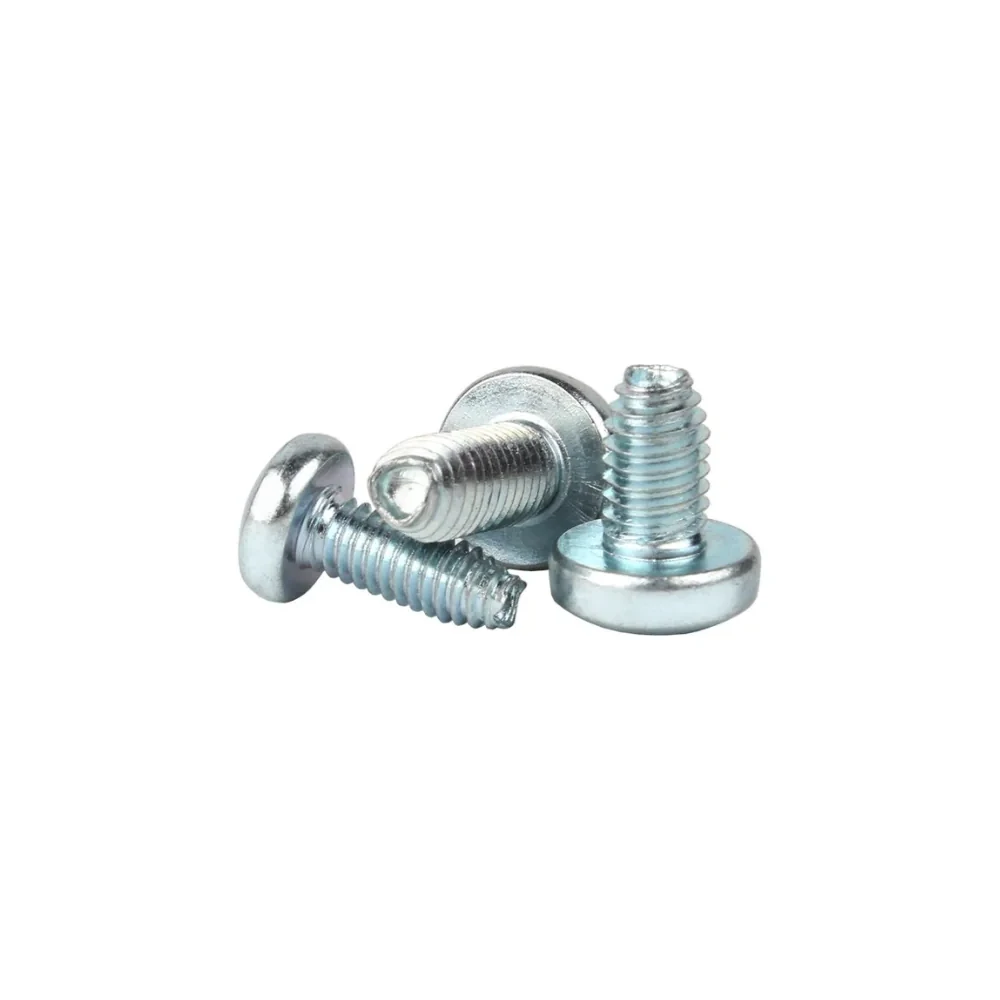
A self-drilling screw drills its own hole, taps its own thread and fastens in one operation. That makes it fast on site — and easy to specify badly. The DIN 7504 family covers several head styles, and the suffix tells you which one you are holding.
Read the suffix first
DIN 7504 is the German standard for self-drilling screws. The letters that follow describe the head:
- K — hex head with an integrated washer face. Good for structural sheet connections and where a socket or spanner can reach.
- M — pan head. A rounded head with a flat bearing surface, common in lighter assemblies and where a low profile is wanted.
- P — countersunk head. Sits flush with the surface, used where the screw must not stand proud.
The drill point and thread geometry are part of the standard family, but the head determines how the load is transferred into the sheet and what tooling is needed.
Match the point to the material thickness
Self-drilling screws are not one-size-fits-all. The drill point has to be long enough to pierce the top sheet and short enough not to damage what is behind it. As a rule:
- thin sheet needs a finer point and lower driving torque;
- thicker sheet or multiple layers need a longer drill point;
- hard or stainless sheet needs a point and coating designed for it, and often a lower driving speed.
If the point is too long, it can drill through the second layer or leave a poor thread engagement. If it is too short, the screw will not start cleanly.
Head style changes the joint
A hex-head K screw can be tightened to a higher torque and is easier to inspect. A pan-head M screw spreads load over a wider area and is less likely to pull through thin sheet. A countersunk P screw needs a matching countersink or dimple; without it, the head sits proud or deforms the sheet.
For outdoor work, the coating matters as much as the head. Zinc-plated screws are common indoors; hot-dip galvanized or stainless screws are used where moisture and salt are present.
Specify the screw in one line
A useful purchase-order line looks like this:
Self-drilling screw DIN 7504 K, 4.8 × 25, zinc plated, 20,000 pcs.
Add the drill point type if it is not the standard one, the coating class, and whether the screws will be collated for an auto-feed tool. Those details affect the price and the lead time.
Check the standard, then check the sample
Standards describe dimensions; they do not guarantee that a screw will drive cleanly into your particular sheet. A small sample run is the fastest way to confirm point length, coating and driving torque. If you send a photo of the joint and the sheet thickness, we can narrow the options before quoting. See the screw family or read the standards guide.